Manual deployments are slow, error-prone, and don't scale. Every time code is pushed, developers manually run tests, build artifacts, and deploy to production. This process is tedious, inconsistent, and prone to human error.
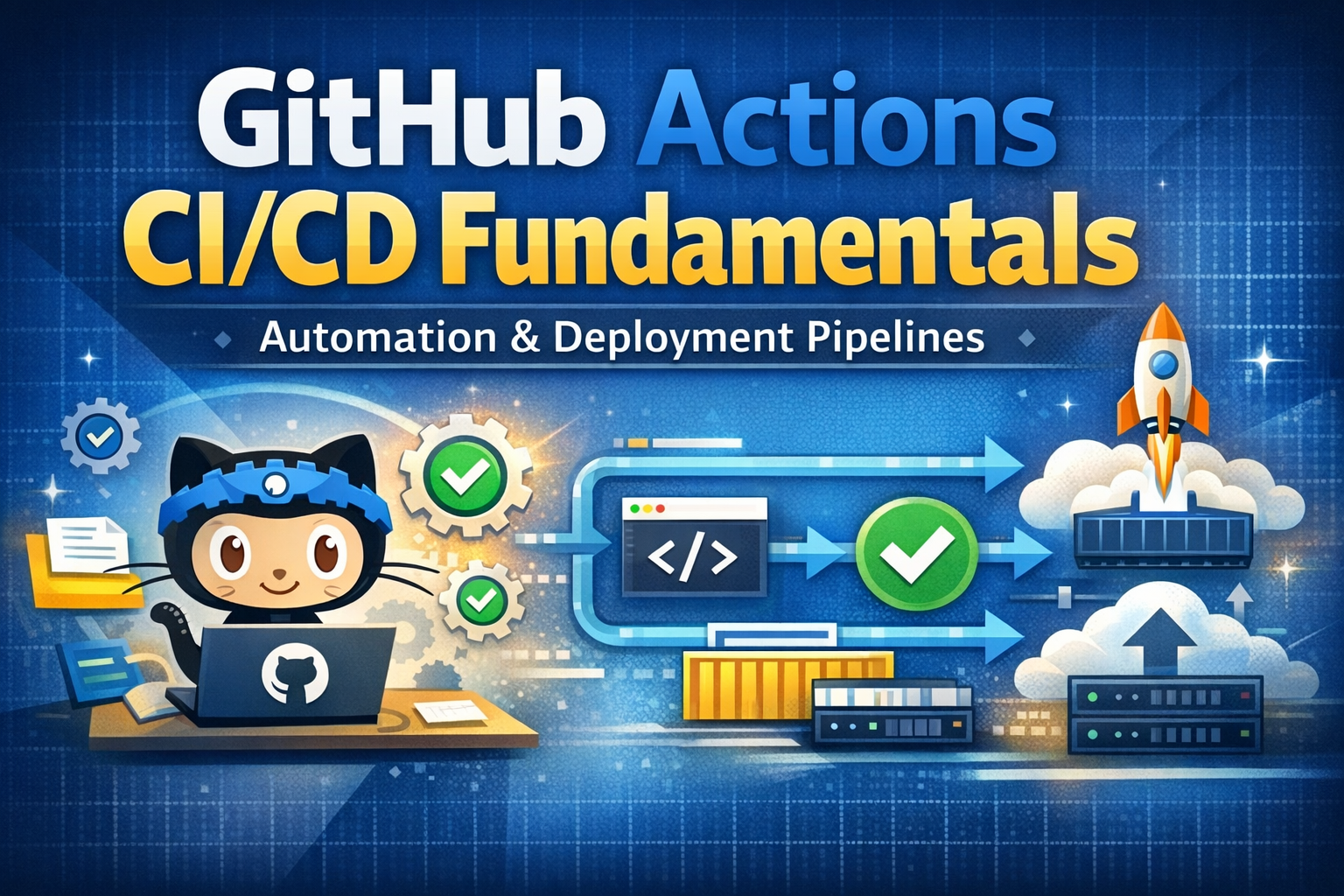
GitHub Actions is a continuous integration and continuous deployment (CI/CD) platform that automates software workflows directly in your repository. Used by millions of developers and organizations, GitHub Actions enables you to build, test, and deploy code automatically whenever you push changes.
In this article, we'll explore GitHub Actions architecture, understand CI/CD fundamentals, and build production-ready pipelines that automate testing, linting, building, and deployment for modern development teams.
Traditional CI/CD approaches had significant limitations:
Separate Tools : Required external services like Jenkins, CircleCI, or Travis CI.
Complex Setup : Difficult to configure and maintain separate infrastructure.
Context Switching : Developers had to leave GitHub to manage CI/CD.
Limited Integration : Poor integration with GitHub features and workflows.
Cost : Expensive infrastructure and licensing fees.
Vendor Lock-in : Difficult to migrate between CI/CD platforms.
Slow Feedback : Delays between code push and test results.
GitHub Actions was built to solve these problems:
Native Integration : Built directly into GitHub, no external tools needed.
Easy Setup : Simple YAML configuration in your repository.
Powerful Automation : Automate any workflow, not just CI/CD.
Community Actions : Thousands of pre-built actions available.
Free for Public Repos : No cost for open-source projects.
Fast Feedback : Immediate test results and notifications.
Flexible : Works with any language, framework, or platform.
Workflow : Automated process defined in YAML, triggered by events.
Event : Trigger that starts a workflow (push, pull_request, schedule, etc.).
Job : Set of steps that execute on the same runner.
Step : Individual task within a job (run command, use action, etc.).
Action : Reusable unit of code that performs a specific task.
Runner : Machine that executes jobs (GitHub-hosted or self-hosted).
Artifact : Files produced by a job that can be used by other jobs.
Secret : Encrypted environment variable for sensitive data.
Event Triggered → Workflow Loaded → Jobs Queued → Runner Assigned → Steps Executed → Results Reported
Event occurs (push, PR, schedule, etc.)
GitHub loads workflow from .github/workflows/
Jobs are queued for execution
Runner is assigned to execute job
Steps execute sequentially
Results are reported and artifacts stored
GitHub Repository ↓ Event Triggered (push, PR, schedule) ↓ Workflow File Loaded (.github/workflows/*.yml) ↓ Jobs Created ↓ Runner Assigned (GitHub-hosted or self-hosted) ↓ Steps Executed ↓ Artifacts & Logs Stored ↓ Status Reported (Checks, Notifications) Workflows are triggered by events and define automation.
name : CI
on : push : branches : [ main , develop ] pull_request : branches : [ main ] schedule : - cron : '0 0 * * *' # Daily at midnight
jobs : build : runs-on : ubuntu-latest steps : - uses : actions/checkout@v3 - name : Run tests run : npm test Common Events:
on : push : # Code pushed to repository pull_request : # Pull request opened/updated schedule : # Scheduled time workflow_dispatch : # Manual trigger release : # Release published issues : # Issue opened/closed pull_request_review : # PR review submitted repository_dispatch : # External trigger via API Use Cases:
Push Events : Run tests on every commitPull Request Events : Validate changes before mergeScheduled Events : Nightly builds, cleanup tasksManual Triggers : On-demand deploymentsRelease Events : Automated release workflows
Jobs contain steps that execute sequentially or in parallel.
jobs : test : runs-on : ubuntu-latest steps : - uses : actions/checkout@v3 - uses : actions/setup-node@v3 with : node-version : '18' - run : npm install - run : npm run lint - run : npm test
build : runs-on : ubuntu-latest needs : test # Wait for test job to complete steps : - uses : actions/checkout@v3 - run : npm run build - uses : actions/upload-artifact@v3 with : name : build path : dist/ Use Cases:
Sequential Jobs : Build depends on testParallel Jobs : Multiple jobs run simultaneouslyConditional Steps : Run steps based on conditionsMatrix Strategy : Run jobs with different configurations
Actions are reusable units of code.
steps : # Official GitHub actions - uses : actions/checkout@v3 - uses : actions/setup-node@v3 with : node-version : '18' - uses : actions/upload-artifact@v3 with : name : build path : dist/
# Community actions - uses : codecov/codecov-action@v3 - uses : aquasecurity/trivy-action@master - uses : docker/build-push-action@v4
# Local actions - uses : ./.github/actions/custom-action Popular Actions:
checkout : Clone repositorysetup-node/python/java : Setup runtimeupload-artifact : Store build artifactsdownload-artifact : Retrieve artifactscache : Cache dependenciesdocker/build-push-action : Build and push Docker images
Use Cases:
Code Checkout : Get repository codeEnvironment Setup : Install dependenciesArtifact Management : Store and retrieve filesThird-party Integration : Codecov, SonarQube, etc.Custom Logic : Reusable workflow steps
Runners execute jobs on specified operating systems.
jobs : test-linux : runs-on : ubuntu-latest steps : - run : echo "Running on Linux"
test-windows : runs-on : windows-latest steps : - run : echo "Running on Windows"
test-macos : runs-on : macos-latest steps : - run : echo "Running on macOS"
test-matrix : runs-on : ${{ matrix.os }} strategy : matrix : os : [ ubuntu-latest , windows-latest , macos-latest ] node-version : [ 16 , 18 , 20 ] steps : - uses : actions/setup-node@v3 with : node-version : ${{ matrix.node-version }} - run : npm test Available Runners:
ubuntu-latest : Linux environmentwindows-latest : Windows environmentmacos-latest : macOS environmentSelf-hosted : Custom machines
Use Cases:
Cross-platform Testing : Test on multiple OSMatrix Strategy : Test multiple configurationsPerformance : Use self-hosted for resource-intensive tasksCompliance : Run on specific infrastructure
Manage sensitive data securely.
env : NODE_ENV : production LOG_LEVEL : info
jobs : deploy : runs-on : ubuntu-latest environment : production steps : - uses : actions/checkout@v3 - name : Deploy run : | echo "Deploying to ${{ secrets.DEPLOY_HOST }}" curl -X POST ${{ secrets.WEBHOOK_URL }} \ -H "Authorization: Bearer ${{ secrets.API_TOKEN }}" env : DATABASE_URL : ${{ secrets.DATABASE_URL }} API_KEY : ${{ secrets.API_KEY }} Secret Types:
Repository Secrets : Available to all workflowsEnvironment Secrets : Specific to environmentOrganization Secrets : Shared across repositoriesVariables : Non-sensitive configuration
Use Cases:
API Keys : Secure authenticationDeployment Credentials : SSH keys, tokensDatabase URLs : Connection stringsConfiguration : Environment-specific settings
Store and retrieve files between jobs.
jobs : build : runs-on : ubuntu-latest steps : - uses : actions/checkout@v3 - uses : actions/setup-node@v3 with : node-version : '18'
# Cache dependencies - uses : actions/cache@v3 with : path : ~/.npm key : ${{ runner.os }}-npm-${{ hashFiles('**/package-lock.json') }} restore-keys : | ${{ runner.os }}-npm-
- run : npm install - run : npm run build
# Upload artifacts - uses : actions/upload-artifact@v3 with : name : build-output path : dist/ retention-days : 5
deploy : needs : build runs-on : ubuntu-latest steps : # Download artifacts - uses : actions/download-artifact@v3 with : name : build-output path : dist/
- name : Deploy run : | echo "Deploying files from dist/" ls -la dist/ Use Cases:
Dependency Caching : Speed up buildsBuild Artifacts : Share between jobsTest Reports : Store test resultsLogs : Archive workflow logs
Run steps or jobs based on conditions.
jobs : test : runs-on : ubuntu-latest steps : - uses : actions/checkout@v3
# Run only on main branch - name : Deploy to production if : github.ref == 'refs/heads/main' run : npm run deploy:prod
# Run only on pull requests - name : Comment on PR if : github.event_name == 'pull_request' run : echo "This is a pull request"
# Run only on failure - name : Notify on failure if : failure() run : echo "Build failed!"
# Run only on success - name : Notify on success if : success() run : echo "Build succeeded!"
# Run always - name : Cleanup if : always() run : rm -rf temp/ Condition Functions:
success() : Previous step succeededfailure() : Previous step failedalways() : Always runcancelled() : Workflow was cancelledgithub.ref : Current branch/taggithub.event_name : Triggering event
Use Cases:
Branch-specific Actions : Different logic per branchEvent-specific Logic : Different behavior for PR vs pushError Handling : Cleanup on failureNotifications : Alert on specific conditions
Control access and deployment environments.
Permissions and Environments permissions : contents : read pull-requests : write checks : write
jobs : deploy-staging : runs-on : ubuntu-latest environment : staging steps : - uses : actions/checkout@v3 - name : Deploy to staging run : npm run deploy:staging
deploy-production : runs-on : ubuntu-latest environment : name : production url : https://example.com needs : deploy-staging steps : - uses : actions/checkout@v3 - name : Deploy to production run : npm run deploy:prod Permission Scopes:
contents : Read/write repository contentpull-requests : Manage pull requestschecks : Create check runsdeployments : Manage deploymentspackages : Publish packages
Use Cases:
Least Privilege : Grant minimal permissionsEnvironment Protection : Require approval for productionDeployment Tracking : Link to deployed URLsAudit Trail : Track who deployed what
Report workflow status and results.
jobs : test : runs-on : ubuntu-latest steps : - uses : actions/checkout@v3 - run : npm test
# Create check run - uses : actions/github-script@v6 if : always() with : script : | github.rest.checks.create({ owner: context.repo.owner, repo: context.repo.repo, name: 'Test Results', head_sha: context.sha, status: 'completed', conclusion: 'success', output: { title: 'All tests passed', summary: 'No failures detected' } }) Use Cases:
PR Checks : Block merge if tests failStatus Badges : Display workflow statusNotifications : Slack, email alertsDeployment Status : Track deployments
Share workflows across repositories.
# .github/workflows/test.yml name : Test
on : workflow_call : inputs : node-version : required : false type : string default : '18' secrets : npm-token : required : false
jobs : test : runs-on : ubuntu-latest steps : - uses : actions/checkout@v3 - uses : actions/setup-node@v3 with : node-version : ${{ inputs.node-version }} registry-url : 'https://registry.npmjs.org' - run : npm install - run : npm test env : NODE_AUTH_TOKEN : ${{ secrets.npm-token }}
# .github/workflows/ci.yml (calling reusable workflow) name : CI
on : [ push , pull_request ]
jobs : test : uses : ./.github/workflows/test.yml with : node-version : '18' secrets : npm-token : ${{ secrets.NPM_TOKEN }} Use Cases:
Code Reuse : Share workflows across reposConsistency : Standardize CI/CD across organizationMaintenance : Update workflow in one placeComposition : Build complex workflows from simple ones
A well-organized repository includes GitHub-specific configuration files and workflows.
. ├── .github/ │ ├── CODEOWNERS # Code ownership rules │ ├── FUNDING.yml # Sponsorship information │ ├── SECURITY.md # Security policy │ ├── ISSUE_TEMPLATE/ │ │ ├── bug_report.yml # Bug report template │ │ ├── feature_request.yml # Feature request template │ │ ├── config.yml # Issue template config │ │ └── blank.md # Blank issue template │ ├── PULL_REQUEST_TEMPLATE.md # PR template │ ├── dependabot.yml # Dependabot configuration │ ├── labeler.yml # Label automation │ └── workflows/ │ ├── lint.yml # Linting workflow │ ├── test.yml # Testing workflow │ ├── build.yml # Build workflow │ ├── pr-checks.yml # PR validation │ ├── release.yml # Release workflow │ ├── deploy.yml # Deployment workflow │ └── security.yml # Security scanning ├── CONTRIBUTING.md # Contribution guidelines ├── LICENSE # License file ├── README.md # Project documentation ├── package.json ├── src/ └── tests/ Define code ownership and require reviews.
# Global owners * @ maintainer1 @maintainer2
# Frontend code /src/components/ @frontend-team /src/pages/ @frontend-team
# Backend code /src/api/ @backend-team /src/services/ @backend-team
# DevOps /docker/ @devops-team /.github/workflows/ @devops-team
# Documentation /docs/ @documentation-team * .md @ documentation-team
# Tests /tests/ @qa-team Use Cases:
Code Review : Require specific reviewersAccountability : Track code ownershipExpertise : Route reviews to expertsGovernance : Enforce review policies
Display sponsorship options.
github : [ maintainer1 , maintainer2 ] patreon : username ko_fi : username custom : [ 'https://example.com/donate' ] Define security policy and reporting.
# Security Policy

## Reporting a Vulnerability

Please email security@example.com with:
- Description of vulnerability
- Steps to reproduce
- Potential impact
- Suggested fix (if any)

## Supported Versions

| Version | Supported |
|---------|-----------|
| 2.x     | ✅        |
| 1.x     | ❌        |

## Security Updates

Security updates are released as patch versions. Standardize issue reporting.
.github/ISSUE_TEMPLATE/bug_report.yml name : Bug Report description : Report a bug title : "[BUG] " labels : [ "bug" ]
body : - type : markdown attributes : value : | Thanks for reporting a bug!
- type : textarea id : description attributes : label : Description description : Describe the bug placeholder : What happened? validations : required : true
- type : textarea id : steps attributes : label : Steps to Reproduce description : How to reproduce the bug placeholder : | 1. Go to... 2. Click... 3. See error... validations : required : true
- type : textarea id : expected attributes : label : Expected Behavior description : What should happen validations : required : true
- type : textarea id : environment attributes : label : Environment description : | - OS: [e.g. macOS, Windows, Linux] - Browser: [e.g. Chrome, Firefox] - Version: [e.g. 1.0.0] validations : required : true .github/ISSUE_TEMPLATE/feature_request.yml name : Feature Request description : Suggest a feature title : "[FEATURE] " labels : [ "enhancement" ]
body : - type : markdown attributes : value : Thanks for suggesting a feature!
- type : textarea id : problem attributes : label : Problem Statement description : What problem does this solve? validations : required : true
- type : textarea id : solution attributes : label : Proposed Solution description : How should this be implemented? validations : required : true
- type : textarea id : alternatives attributes : label : Alternatives Considered description : Other approaches considered Standardize PR descriptions.
.github/PULL_REQUEST_TEMPLATE.md ## Description Brief description of changes
## Type of Change - [ ] Bug fix - [ ] New feature - [ ] Breaking change - [ ] Documentation update
## Related Issues Closes #(issue number)
## Testing - [ ] Unit tests added - [ ] Integration tests added - [ ] Manual testing completed
## Checklist - [ ] Code follows style guidelines - [ ] Self-review completed - [ ] Comments added for complex logic - [ ] Documentation updated - [ ] No new warnings generated - [ ] Tests pass locally
## Screenshots (if applicable) Add screenshots for UI changes
## Additional Context Any additional information Automate dependency updates.
version : 2 updates : # npm dependencies - package-ecosystem : "npm" directory : "/" schedule : interval : "weekly" day : "monday" time : "03:00" open-pull-requests-limit : 5 reviewers : - "maintainer1" labels : - "dependencies" commit-message : prefix : "chore(deps):"
# GitHub Actions - package-ecosystem : "github-actions" directory : "/" schedule : interval : "weekly" labels : - "dependencies" - "github-actions"
# Docker - package-ecosystem : "docker" directory : "/" schedule : interval : "weekly" labels : - "dependencies" - "docker" Automate label assignment.
# Label based on file changes frontend : - changed-files : - any-glob-to-any-file : 'src/components/**'
backend : - changed-files : - any-glob-to-any-file : 'src/api/**'
devops : - changed-files : - any-glob-to-any-file : '.github/**' - any-glob-to-any-file : 'docker/**'
documentation : - changed-files : - any-glob-to-any-file : '**/*.md'
tests : - changed-files : - any-glob-to-any-file : 'tests/**' .github/workflows/lint.yml name : Lint
on : push : branches : [ main , develop ] pull_request : branches : [ main , develop ]
jobs : lint : runs-on : ubuntu-latest steps : - uses : actions/checkout@v3
- uses : actions/setup-node@v3 with : node-version : '18' cache : 'npm'
- run : npm ci
- name : Run ESLint run : npm run lint
- name : Run Prettier run : npm run format:check
- name : Run TypeScript run : npm run type-check .github/workflows/test.yml name : Test
on : push : branches : [ main , develop ] pull_request : branches : [ main , develop ]
jobs : test : runs-on : ubuntu-latest strategy : matrix : node-version : [ 16 , 18 , 20 ]
steps : - uses : actions/checkout@v3
- uses : actions/setup-node@v3 with : node-version : ${{ matrix.node-version }} cache : 'npm'
- run : npm ci
- name : Run unit tests run : npm run test:unit
- name : Run integration tests run : npm run test:integration
- name : Upload coverage uses : codecov/codecov-action@v3 with : files : ./coverage/coverage-final.json flags : unittests name : codecov-umbrella .github/workflows/build.yml name : Build
on : push : branches : [ main , develop ] pull_request : branches : [ main , develop ]
jobs : build : runs-on : ubuntu-latest steps : - uses : actions/checkout@v3
- uses : actions/setup-node@v3 with : node-version : '18' cache : 'npm'
- run : npm ci
- name : Build application run : npm run build
- name : Upload build artifacts uses : actions/upload-artifact@v3 with : name : build path : dist/ retention-days : 5
- name : Check bundle size run : npm run build:analyze .github/workflows/pr-checks.yml name : PR Checks
on : pull_request : branches : [ main , develop ]
jobs : validate : runs-on : ubuntu-latest steps : - uses : actions/checkout@v3 with : fetch-depth : 0
- uses : actions/setup-node@v3 with : node-version : '18' cache : 'npm'
- run : npm ci
- name : Lint run : npm run lint
- name : Type check run : npm run type-check
- name : Test run : npm run test
- name : Build run : npm run build
- name : Check for breaking changes run : npm run check:breaking-changes
- name : Generate coverage report run : npm run test:coverage
- name : Comment PR with results if : always() uses : actions/github-script@v6 with : script : | github.rest.issues.createComment({ issue_number: context.issue.number, owner: context.repo.owner, repo: context.repo.repo, body: '✅ All checks passed!' }) .github/workflows/release.yml name : Release
on : push : tags : - 'v*'
jobs : release : runs-on : ubuntu-latest permissions : contents : write packages : write
steps : - uses : actions/checkout@v3
- uses : actions/setup-node@v3 with : node-version : '18' registry-url : 'https://registry.npmjs.org'
- run : npm ci
- name : Build run : npm run build
- name : Publish to npm run : npm publish env : NODE_AUTH_TOKEN : ${{ secrets.NPM_TOKEN }}
- name : Create GitHub Release uses : actions/create-release@v1 env : GITHUB_TOKEN : ${{ secrets.GITHUB_TOKEN }} with : tag_name : ${{ github.ref }} release_name : Release ${{ github.ref }} body : | Changes in this Release - Feature 1 - Feature 2 draft : false prerelease : false
- name : Upload artifacts uses : actions/upload-release-asset@v1 env : GITHUB_TOKEN : ${{ secrets.GITHUB_TOKEN }} with : upload_url : ${{ steps.create_release.outputs.upload_url }} asset_path : ./dist/app.zip asset_name : app.zip asset_content_type : application/zip .github/workflows/deploy.yml name : Deploy
on : push : branches : [ main ] workflow_dispatch :
jobs : deploy-staging : runs-on : ubuntu-latest environment : staging steps : - uses : actions/checkout@v3
- uses : actions/setup-node@v3 with : node-version : '18' cache : 'npm'
- run : npm ci - run : npm run build
- name : Deploy to staging run : | npm run deploy:staging env : DEPLOY_KEY : ${{ secrets.STAGING_DEPLOY_KEY }} DEPLOY_HOST : ${{ secrets.STAGING_HOST }}
deploy-production : runs-on : ubuntu-latest environment : name : production url : https://example.com needs : deploy-staging steps : - uses : actions/checkout@v3
- uses : actions/setup-node@v3 with : node-version : '18' cache : 'npm'
- run : npm ci - run : npm run build
- name : Deploy to production run : | npm run deploy:prod env : DEPLOY_KEY : ${{ secrets.PROD_DEPLOY_KEY }} DEPLOY_HOST : ${{ secrets.PROD_HOST }}
- name : Notify deployment if : success() run : | curl -X POST ${{ secrets.SLACK_WEBHOOK }} \ -H 'Content-Type: application/json' \ -d '{"text":"Deployment successful!"}' .github/workflows/security.yml name : Security
on : push : branches : [ main , develop ] pull_request : branches : [ main , develop ] schedule : - cron : '0 0 * * 0' # Weekly
jobs : security : runs-on : ubuntu-latest steps : - uses : actions/checkout@v3
- name : Run Trivy vulnerability scanner uses : aquasecurity/trivy-action@master with : scan-type : 'fs' scan-ref : '.' format : 'sarif' output : 'trivy-results.sarif'
- name : Upload Trivy results uses : github/codeql-action/upload-sarif@v2 with : sarif_file : 'trivy-results.sarif'
- name : Run npm audit run : npm audit --audit-level=moderate
- name : SAST with CodeQL uses : github/codeql-action/init@v2 with : languages : 'javascript'
- name : Autobuild uses : github/codeql-action/autobuild@v2
- name : Perform CodeQL Analysis uses : github/codeql-action/analyze@v2 .github/workflows/labeler.yml name : Labeler
on : pull_request : types : [ opened , synchronize , reopened ]
jobs : label : runs-on : ubuntu-latest permissions : contents : read pull-requests : write
steps : - uses : actions/labeler@v4 with : repo-token : ${{ secrets.GITHUB_TOKEN }} configuration-path : .github/labeler.yml # ❌ Wrong - secrets in workflow - name : Deploy run : | curl -H "Authorization: Bearer abc123xyz" https://api.example.com
# ✅ Correct - use secrets - name : Deploy run : | curl -H "Authorization: Bearer ${{ secrets.API_TOKEN }}" https://api.example.com # ❌ Wrong - reinstalls dependencies every time - run : npm install - run : npm test
# ✅ Correct - cache dependencies - uses : actions/cache@v3 with : path : ~/.npm key : ${{ runner.os }}-npm-${{ hashFiles('**/package-lock.json') }} - run : npm ci - run : npm test # ❌ Wrong - runs all combinations strategy : matrix : os : [ ubuntu-latest , windows-latest , macos-latest ] node-version : [ 14 , 16 , 18 , 20 ] # Results in 12 jobs
# ✅ Correct - only necessary combinations strategy : matrix : include : - os : ubuntu-latest node-version : 18 - os : windows-latest node-version : 18 - os : macos-latest node-version : 18 # ❌ Wrong - no error handling - name : Deploy run : npm run deploy
# ✅ Correct - handle errors - name : Deploy run : npm run deploy continue-on-error : true
- name : Notify on failure if : failure() run : echo "Deployment failed" # ❌ Wrong - sequential jobs jobs : test : runs-on : ubuntu-latest steps : - run : npm test lint : needs : test runs-on : ubuntu-latest steps : - run : npm run lint
# ✅ Correct - parallel jobs jobs : test : runs-on : ubuntu-latest steps : - run : npm test lint : runs-on : ubuntu-latest steps : - run : npm run lint # ❌ Wrong - uses latest - uses : actions/checkout@latest
# ✅ Correct - uses specific version - uses : actions/checkout@v3 .github/workflows/ ├── lint.yml # Code quality ├── test.yml # Testing ├── build.yml # Building ├── security.yml # Security scanning ├── deploy.yml # Deployment └── release.yml # Release process # Share common logic across workflows jobs : test : uses : ./.github/workflows/test.yml with : node-version : '18' # Require workflows to pass before merge # Settings → Branches → Branch protection rules # → Require status checks to pass before merging # Track execution time - name : Report timing run : | echo "Workflow completed in ${{ job.duration }} seconds" environment : name : production url : https://example.com # Add comments explaining complex logic # Use descriptive job and step names - name : Run security scan with Trivy run : trivy scan . # Use act to test workflows locally act -j test GitHub Actions transforms CI/CD from complex infrastructure to simple, integrated automation. Understanding workflows, jobs, actions, and best practices enables you to build reliable, efficient pipelines.
Key takeaways:
Use workflows to automate repetitive tasks
Organize repository with standard structure
Implement comprehensive CI/CD pipelines
Use secrets for sensitive data
Cache dependencies for speed
Run jobs in parallel when possible
Implement status checks for quality gates
Monitor and optimize workflow performance
Next steps:
Set up basic lint and test workflows
Add build and deployment workflows
Configure branch protection rules
Set up status checks
Implement security scanning
Monitor workflow performance
Optimize for speed and reliability
GitHub Actions makes CI/CD accessible and powerful. Master it, and you'll build systems that are reliable, fast, and maintainable.