#Project Overview
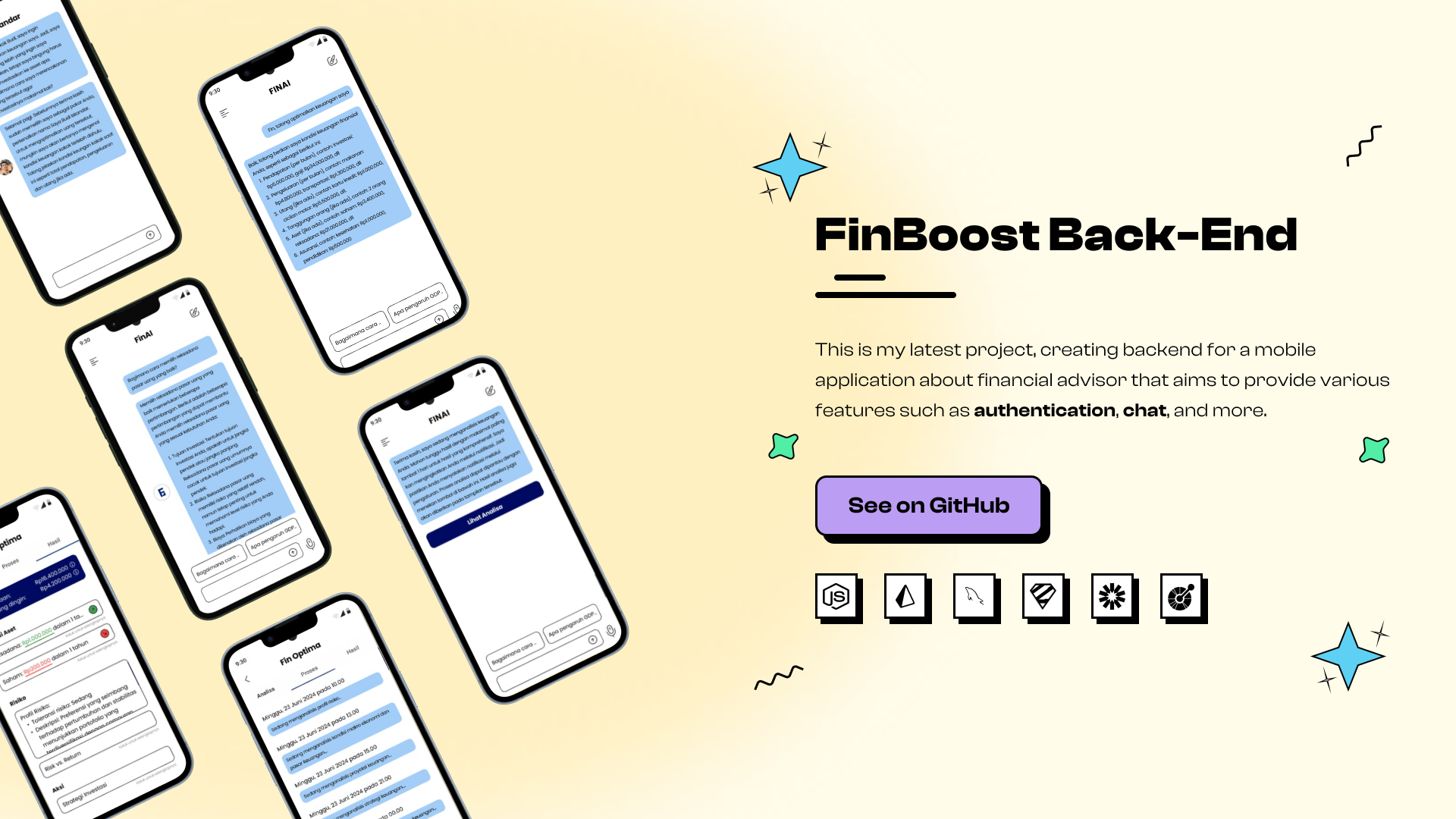
Finboost Backend is the backend service for a mobile application designed to provide core features such as authentication, chat, and AI/LLM integration. This backend was developed as part of the Bangkit Academy 2024 Batch 2 capstone project, a program organized by Google, Tokopedia, Gojek, and Traveloka.
The project was built as a team-based capstone, simulating a real-world startup environment where multiple disciplines collaborate to deliver a complete product.
#Bangkit Academy & Capstone Context
Bangkit Academy is an intensive industry-led program that concludes with a Capstone Project, where participants work in cross-functional teams. At the time, Bangkit offered three capstone tracks:
- Entrepreneur Track
- Company Track
- Product Track
Our team was selected into the Entrepreneur Track, which required an additional selection process. Only teams with ideas deemed viable were accepted. This track was particularly challenging but rewarding, as strong projects had the opportunity to receive incubation funding to further develop the product into a production-ready startup.
#Team Composition
The Finboost project team consisted of members from three learning paths:
- Cloud Computing: 2 members (including myself)
- Mobile Development: 2 members
- Machine Learning: 3 members
This composition was designed to reflect real startup roles, covering infrastructure, application development, and AI capabilities.
#My Role & Responsibilities
I was part of the Cloud Computing learning path, and my primary responsibilities included:
- Designing and implementing the RESTful API
- Building the backend system architecture
- Handling deployment and infrastructure on Google Cloud Platform (GCP)
- Integrating supporting services for scalability and reliability
In practice, I handled approximately 90–95% of the backend development, including architecture decisions and implementation. While collaboration and communication were active (daily discussions via Discord), the workload distribution in the cloud computing role ended up being heavily skewed toward me.
The project followed an Agile Scrum-based SDLC, with task planning, iteration, and regular progress discussions.
#Backend Architecture & Technology
The backend was built using a modern and production-oriented stack:
-
Node.js & Express
- RESTful API development
-
Prisma ORM
- Database access and schema management
-
MySQL
- Relational database
-
JWT
- Authentication and authorization
-
Zod
- Runtime validation and request schema validation
-
Firebase
- Supporting services (e.g., notifications or integrations)
-
OpenAPI
- API documentation
-
Docker
- Containerization for consistent environments
-
GitHub Actions
- CI/CD automation
#Google Cloud Platform (GCP)
For deployment and infrastructure, I worked extensively with GCP services, including:
-
Compute Engine
- VM-based deployment
-
VPC
- Network configuration and isolation
-
Google Cloud Storage (GCS)
- Object storage
-
Container Registry (GCR) / Cloud Run
- Serverless and container-based deployment
This setup allowed the backend to be scalable, reproducible, and aligned with cloud-native practices.
#Key Features
Some of the main features provided by the Finboost backend include:
- User authentication and authorization
- Chat system
- Integration with LLM-based features
- API-first architecture for mobile consumption
- Secure and validated request handling
- Cloud-native deployment and CI/CD workflow
#Challenges & Experience
One of the biggest challenges in this project was:
- Managing a large portion of the backend work individually
- Coordinating across multiple learning paths
- Balancing Bangkit activities with other responsibilities
- Maintaining delivery quality under tight deadlines
Despite these challenges, the experience was extremely valuable and realistic, closely resembling real-world startup and enterprise project conditions.
#What I Learned
Through the Finboost Backend project and the Bangkit Academy program, I gained extensive experience in:
- Designing and building RESTful backend systems
- Cloud-native deployment on Google Cloud Platform
- CI/CD pipeline implementation
- Working with cross-functional teams
- Applying Agile Scrum in a real project
- Improving time management, communication, and ownership
- Bridging backend engineering with mobile and ML requirements
One of the most surprising and rewarding outcomes was graduating as a Distinction Graduate, recognized as one of the top 10% graduates of the program.
#Distinction
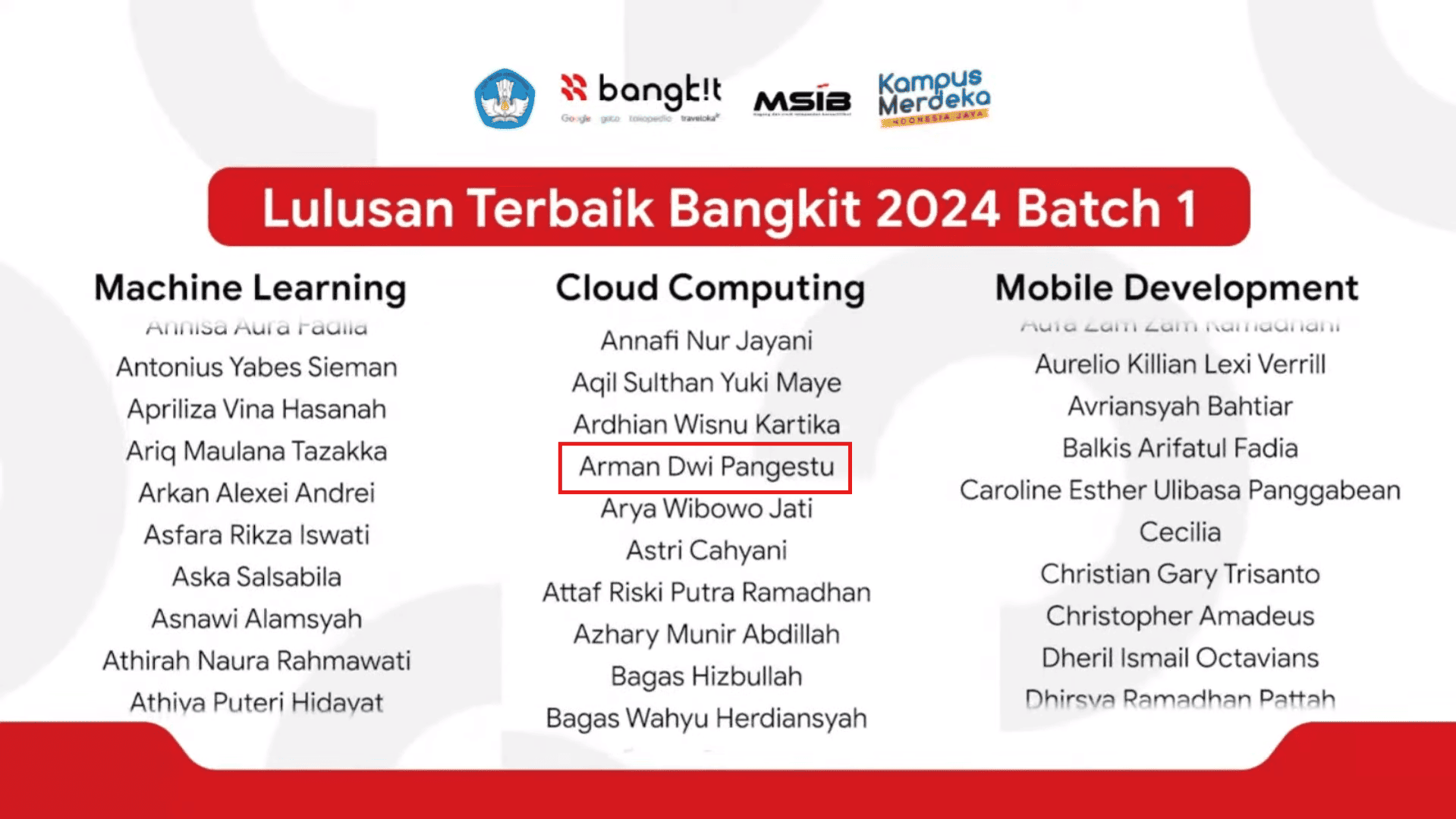 Bangkit Distinction Announcement
#Certificate
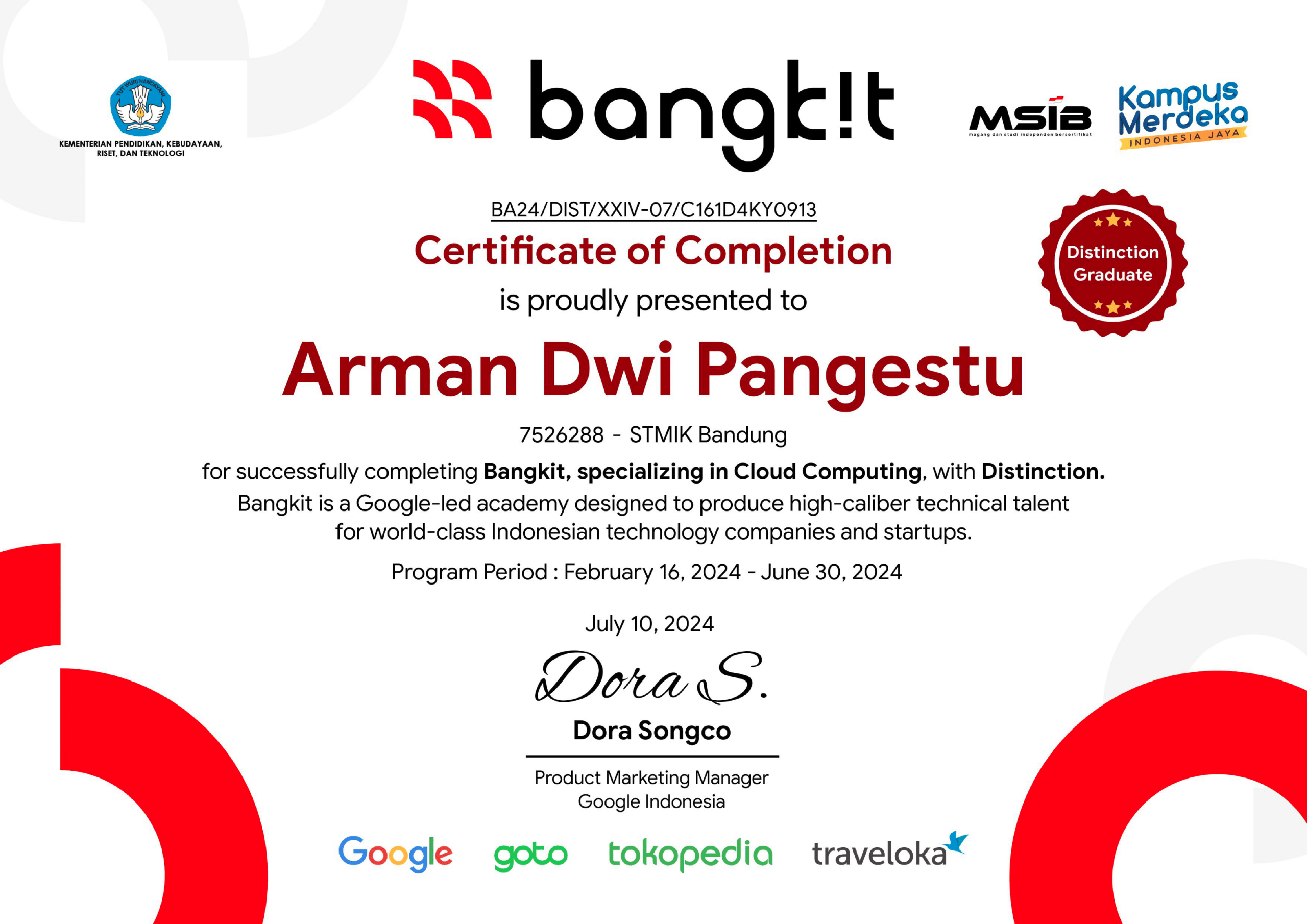 Bangkit Certificate
#Learn Achievement
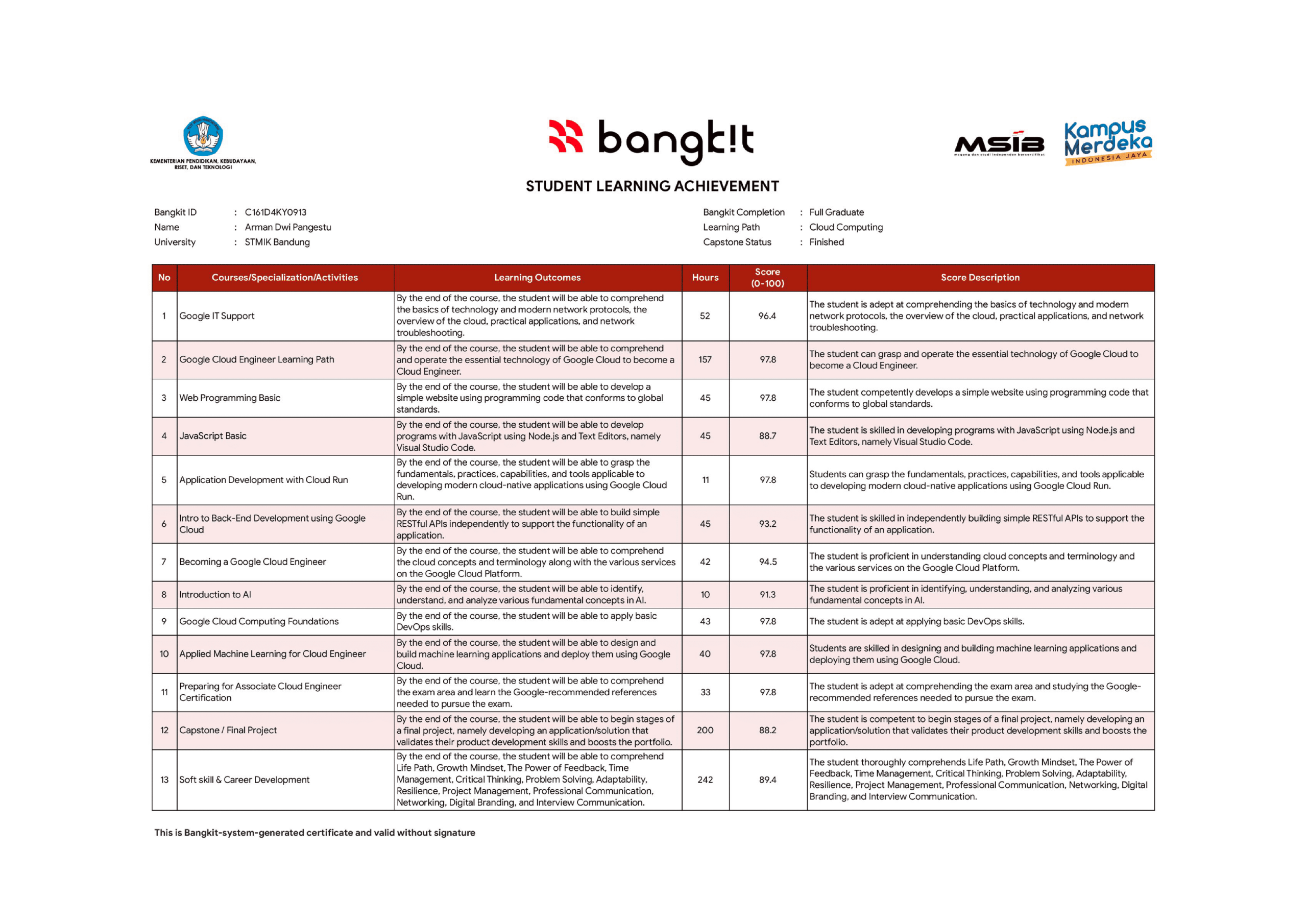 Bangkit Learn Achievement
#Why This Project Matters
Finboost Backend is one of the most important projects in my journey because it:
- Represents a real-world, team-based, cloud-native backend system
- Demonstrates my ability to own and deliver a critical system component
- Combines backend engineering, cloud infrastructure, and DevOps practices
- Reflects both technical depth and professional growth
#Conclusion
Finboost Backend is a capstone project that encapsulates my experience at Bangkit Academy—challenging, intensive, and highly rewarding. Built using Node.js, modern tooling, and Google Cloud infrastructure, this project demonstrates my capability to design, implement, and deploy a production-oriented backend system.
Although the team did not proceed to the incubation stage, the knowledge, skills, and experience gained from this project were invaluable and had a significant impact on my technical and professional development.
For more details, architecture insights, and source code, please refer directly to the project repository on GitHub.